At the final checkout screen,
you just move forward.
Options already checked:
insurance,
seat,
baggage.
It’s annoying to review each one,
so you proceed as is.
With that 10-second choice,
100 dollars gets added.
This is not an add-on issue.
It is about whether you chose it or not.
Q. Aren’t the default checked options just necessary services?
A.
At first, it feels that way. Since they are already checked, they look like default requirements. I used to proceed without changing them.
When booking a flight, insurance, seat selection, and priority boarding were all checked, and I just continued.
After completing the payment, I looked at the total again, and it was over 100 dollars higher than the original price.
That was the first time I checked each item.
Insurance 50 dollars
Seat 30 dollars
Priority boarding 20 dollars
None of these were things I actively chose. They were just pre-selected.
What I realized was simple.
This was not my choice. It was already added.
So this is what I do.
Before payment, I review everything that is checked.
Q. Why are these options pre-selected by default?
A.
Because of the structure.
Platforms know that people tend to proceed as is.
If something is checked, it is likely to stay that way.
I once repeated the same booking and removed all options.
The price dropped significantly.
What I realized was this.
This is not a service. It is a cost added by structure.
So this is what I do.
I don’t leave default selections as they are.
Q. Do these options really add up that much?
A.
More than expected.
Even for a single flight:
insurance,
seat selection,
baggage,
priority boarding.
Three to four items are often included by default.
I once booked a 600 dollar flight and proceeded without thinking. The final amount was over 700 dollars.
What I realized was simple.
This is not one add-on. It is accumulation.
So this is what I do.
I judge based on the final total.
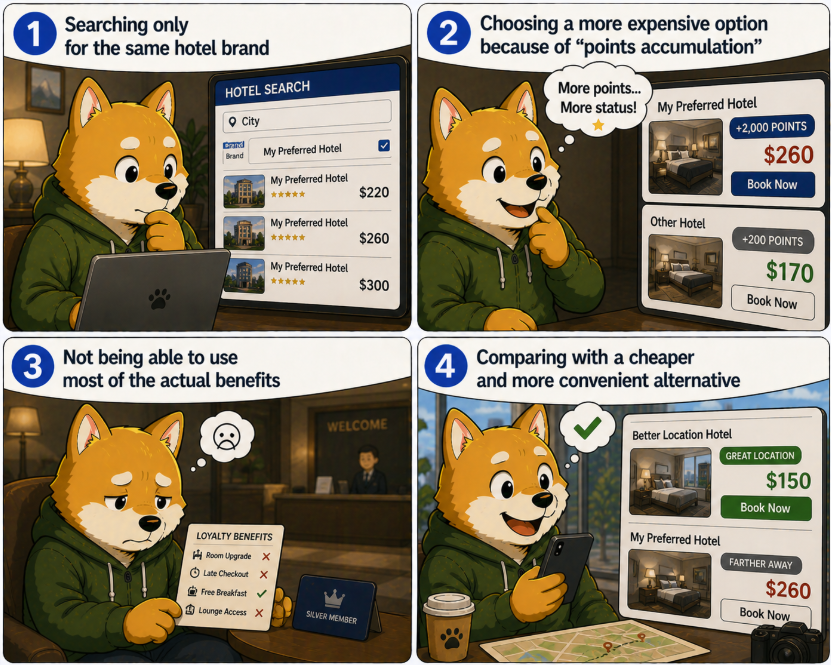
Q. Does this also happen with hotel bookings?
A.
Exactly the same.
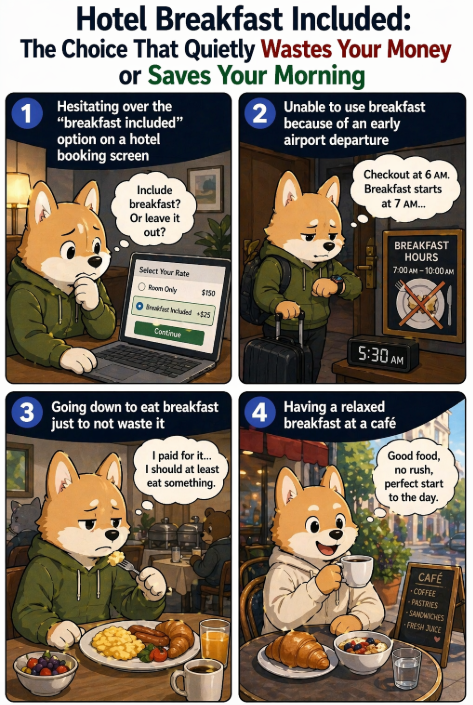
Breakfast included,
late checkout,
additional services.
These are often pre-selected.
I once booked a hotel without realizing breakfast was included, and later saw that it added 40 dollars per night.
For three nights, that was 120 dollars.
What I realized was this.
This was not a choice. It was a cost set as default.
So this is what I do.
For hotels, I also check all options before payment.
Q. Then should all these options be removed?
A.
Not removed blindly, but re-selected.
Now I uncheck everything by default and choose only what I need.
For example,
on a long flight, I include seat selection.
On a short flight, I don’t.
For insurance,
I include it only when needed.
That’s how a standard forms.
So this is what I do.
I don’t follow defaults. I choose again.
Q. What is the most common mistake people make?
A.
Thinking that “if it’s checked, it must be necessary.”
I used to think that too.
But now I see that it was the most expensive choice.
Saving 10 seconds
was costing 100 dollars.
So this is what I do.
I question everything that is checked.
Q. Then how do you summarize the conclusion?
A.
It’s simple.
Default options are convenient but expensive.
Manual selection is inconvenient but accurate.
This is not a convenience issue.
It is a cost control issue.
So this is what I do.
Before payment, I uncheck everything and select again.
Published date
2026-05-07