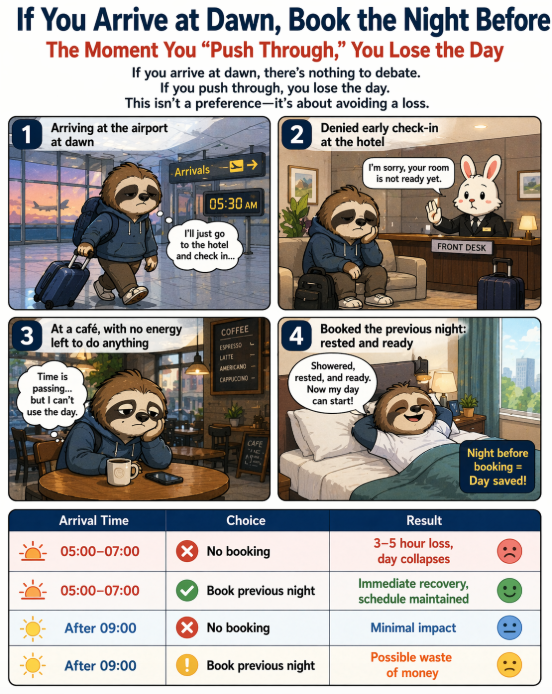
Not getting into your room early is expected.
But the moment you can’t store your luggage, everything changes.
At that point, it’s no longer about waiting.
It becomes a situation where both time and money start leaking.
This is not about whether hotels hold luggage.
This is about what actually happens when they don’t—and how that turns into a cost decision.
Q. Most hotels hold luggage before check-in, right?
A.
That’s what most people assume. I used to think the same.
You arrive early, can’t check in yet, but at least they’ll hold your bags.
And yes, large hotels usually do.
You drop your luggage, your hands are free, and your day starts.
But the real problem begins the moment that assumption fails.
Smaller hotels, understaffed properties, or certain hours—sometimes they simply refuse.
And that’s where everything shifts.
You expected the room to be unavailable, but not your mobility.
Now you’re standing there, still holding everything, and your plan disappears.
That’s why I now check luggage storage first, not the room.
Q. What actually changes when luggage storage isn’t available?
A.
You feel it the moment you try to move.
One suitcase is manageable. Two or more, and everything becomes friction.
You walk into a café—you feel out of place.
You try to sit—you feel like you’re taking too much space.
You think about public transit—stairs, transfers, crowds.
Suddenly, simple movement becomes a decision.
So your options shrink fast:
Stay nearby, or spend money to move.
That’s when the day stops being travel and turns into luggage management.
That’s why this isn’t a small inconvenience.
It’s a constraint on your entire day.
Q. Does it really turn into a cost problem that quickly?
A.
Immediately.
If the hotel refuses, you look for external storage.
That’s about 5 to 10 dollars per bag.
But that’s just the start.
You still need to get there.
Taxi or rideshare: 20 to 30 dollars.
Time: at least 30 minutes gone.
What was supposed to be free
becomes a 50-dollar decision in less than an hour.
But more importantly, it breaks your flow.
You’re moving, you’re carrying, you’re adjusting.
You’re already tired, and now your day is delayed.
So now, I don’t wait.
If storage fails, I immediately switch to an external option.
I cut the loss before it grows.
Q. Do hotels differ a lot in whether they allow storage?
A.
Very much.
Large chains are reliable.
They have space, staff, and systems.
Airport hotels are similar.
They’re built around early arrivals.
Boutique and smaller hotels are unpredictable.
Some help, some don’t, some simply can’t.
So you can’t treat all hotels the same.
Now, I don’t choose based on location first.
I check luggage handling first.
Because that’s what decides whether my day moves or stops.
Q. Should you confirm this before arriving?
A.
This is the easiest fix.
After booking, just send one message:
“Can I store my luggage before check-in?”
That one line changes everything.
If they say yes, you plan your day freely.
If they say no, you prepare alternatives.
Arriving without knowing
means you’re forced to react on the spot.
And that’s when options disappear.
Q. What about booking the previous night instead?
A.
That’s trading money for certainty.
At first, it feels expensive.
But after losing hours, energy, and momentum,
you start seeing it differently.
If your schedule matters,
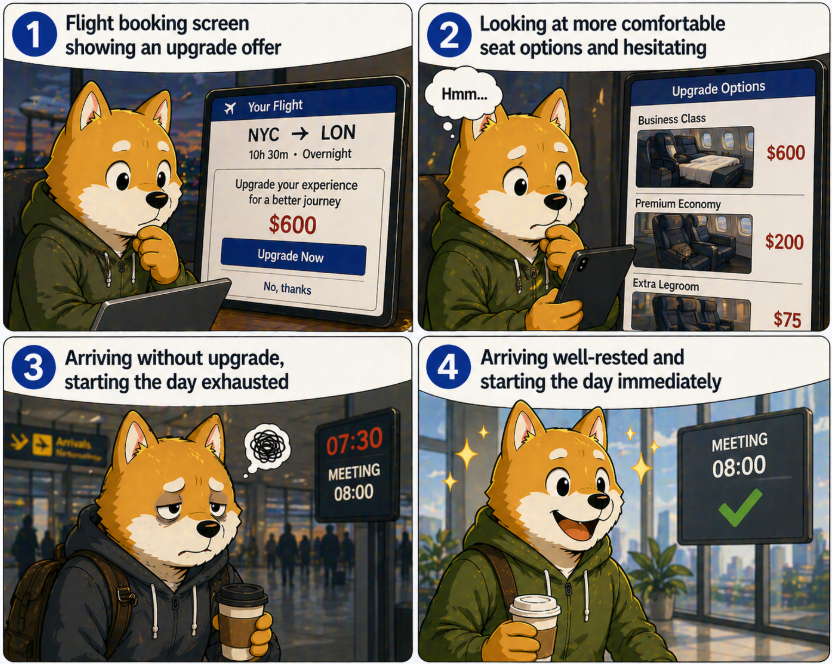
starting the day already rested is a completely different experience
than starting it exhausted in a lobby.
So for important days,
I book the night before.
It’s not extra cost.
It’s removing risk.
Q. So what’s the real rule here?
A.
If your bags are stuck, you’re stuck.
If your bags are free, your day moves.
Rooms can wait.
Luggage cannot.
Now, I don’t think about early check-in first.
I solve luggage first.
| Situation | Choice | Result |
|---|---|---|
| Luggage accepted | Go out immediately | Time used, day continues |
| Luggage denied | Wait in lobby | Time lost, energy drops |
| Luggage denied | Use external storage | Money spent, mobility restored |
Published Date
2026-04-16