At the final step of checkout,
this always appears.
“Would you like to add trip protection?”
The price is 40 dollars, 50 dollars.
So most people just click it.
But with this one choice,
you didn’t buy protection,
you bought the same thing twice.
This is not a safety issue.
It is about buying something you already have.
Q. Isn’t airline trip protection a safe option to just add?
A.
At first, you almost click it automatically. The amount is small, and the word “protection” makes it hard to skip. I used to always add it.
Once, I booked a 600 dollar flight and added a 59 dollar protection option. At that time, I just wanted peace of mind.
But later, when my schedule changed and I canceled, I didn’t get a refund.
I received airline credit instead.
Not cash, but something to use later.
Then I checked my card benefits again and realized cancellation coverage was already included.
What I realized was simple.
This was not protection. It was duplication.
So this is what I do.
Before adding anything, I check what coverage I already have.
Q. What exactly does airline protection cover?
A.
The scope is usually limited.
It may cover cancellation or changes, but the form matters.
In many cases, it is not a cash refund, but credit.
I once bought it without checking, and ended up receiving credit with conditions instead of money.
If you don’t use it, it has no real value.
So this is what I do.
I check the refund form before the coverage.
Q. Does it often overlap with card insurance?
A.
Very often.
Premium cards usually already include coverage for cancellations or delays.
I once paid with a card and still added airline protection.
Later, I saw both covered the same situations.
But in reality, only one applies.
So this is what I do.
I cover each risk only once.
Q. Then are there cases where airline protection is necessary?
A.
Yes.
When the ticket is completely non-refundable and you have no card or insurance coverage.
In that case, it provides some flexibility.
I once considered it for a low-cost airline ticket that was fully non-refundable.
There were no other options structurally.
So this is what I do.
I use it only as a backup when there is no existing coverage.
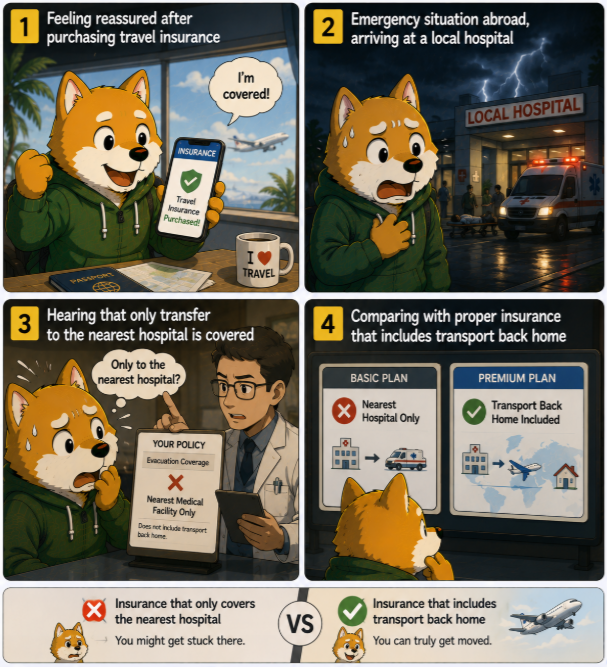
Q. Isn’t it safer to combine it with travel insurance?
A.
They often overlap.
Travel insurance already includes cancellation coverage.
If you add airline protection as well, you are buying the same risk twice.
I once used both and realized only one applied.
So this is what I do.
I don’t combine insurance and airline protection.
Q. What is the most common mistake people make?
A.
Treating it as a small amount.
I used to think 50 dollars was nothing and added it without thinking.
But over multiple trips, it added up.
Later, when I calculated, it was a significant amount.
What I realized was this.
It was not a small cost. It was a repeated cost.
So this is what I do.
Even small amounts, I check the structure.
Q. Then how do you summarize the conclusion?
A.
It’s simple.
If you already have coverage, don’t add it.
If you don’t, use it only then.
This is not a safety issue.
It is a duplication issue.
So this is what I do.
I don’t leave checked protection options as they are.
Published date
2026-05-07