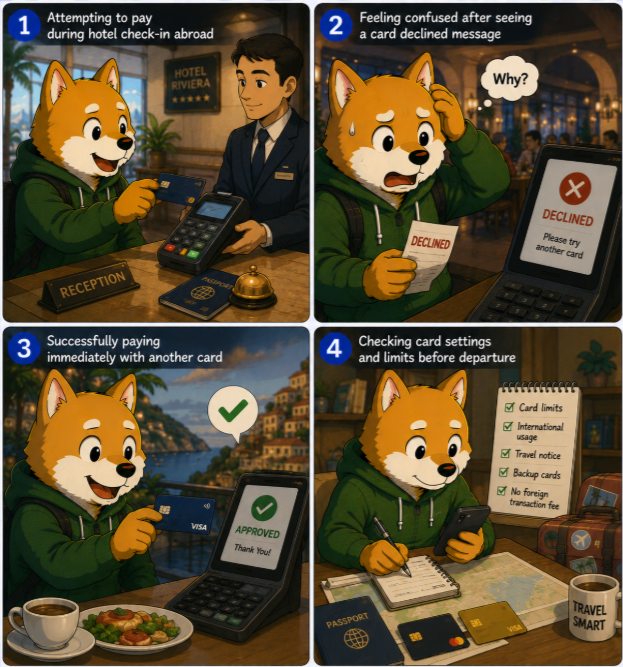
You tap your card.
Payment failed.
You try again.
Failed again.
From that moment,
the flow of the trip stops.
But most of the time,
the issue is not money.
The bank temporarily blocked it.
The real problem begins
when there is no backup card.
Q. Why do cards get blocked so often abroad?
A.
From the bank’s perspective, it looks unusual.
Suddenly using the card in a country you normally never use,
with a larger amount,
and a completely different pattern.
When those factors appear together, the system automatically treats it as a risk signal.
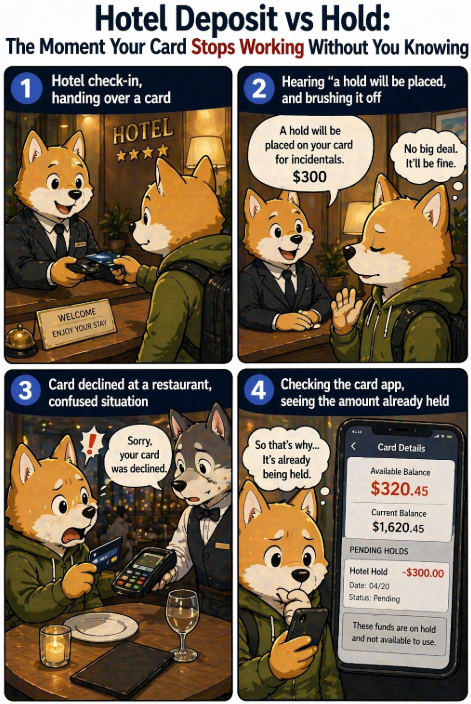
I once had my card blocked while checking into a hotel abroad.
There was enough money, but the payment failed.
At first, I thought it was a machine issue.
But when I checked the app, there was a suspicious transaction alert.
What I realized was simple.
This was not a payment failure. It was a security response.
So this is what I do.
If a card gets blocked, I don’t suspect the balance first.
Q. What should you do immediately when a card gets blocked?
A.
Most of the time, it can be fixed immediately.
Now, when my card gets blocked, I open the banking app first.
In many cases, pressing the transaction confirmation button restores it immediately.
In the past, I had to call the bank, but now it is often resolved in the app.
Once, my payment failed at a café abroad, but after approving it in the app and trying again two minutes later, it worked immediately.
So this is what I do.
If payment fails, I open the app first.
Q. Is it more dangerous if a debit card gets blocked?
A.
Much more dangerous.
If a credit card gets blocked, you can switch to another card.
But debit cards are directly connected to cash itself.
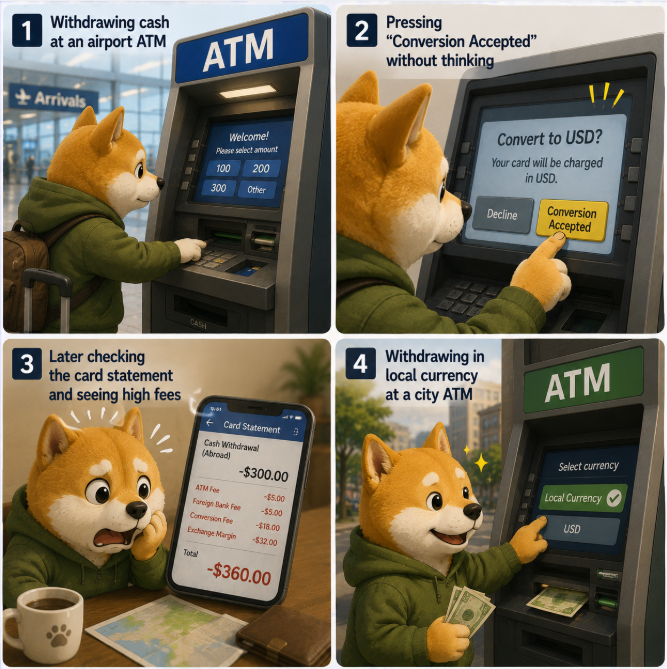
I once traveled carrying only a debit card, and even the ATM stopped working.
That day, I completely lost access to cash.
From that moment, the available options drop sharply.
So this is what I do.
I never travel abroad with only one debit card.
Q. Why is carrying only one card so risky?
A.
The problem is not the blocked card itself.
It is having no backup option.
I once traveled with only one card, and it got blocked during hotel check-in.
Because there was no backup card, the check-in itself was delayed.
I had to wait in the lobby while contacting the bank and verifying everything.
What I realized was this.
More dangerous than the card issue itself was having no backup structure.
So this is what I do.
When traveling abroad, I carry at least two cards.
Q. Does moving across multiple countries increase the chance of being blocked?
A.
Definitely.
If countries keep changing within a short period, the bank system sees it as unusual.
I once traveled through Japan, Thailand, and the UAE consecutively, and my card got blocked in the middle.
From the bank’s perspective, it looked like abnormal movement.
So this is what I do.
For multi-country travel, I prepare both travel notices and backup cards.
Q. What is the most common mistake people make?
A.
Thinking, “There’s no way my card will get blocked.”
I used to think that too.
But abroad, once a card gets blocked, the impact becomes much larger.
Especially when hotels, transportation, and cash access are all connected, the entire flow stops.
So this is what I do.
More important than preventing blocks is building a structure with backup options.
Q. Then how do you summarize the conclusion?
A.
It’s simple.
Most card blocks are temporary.
But without backup, the entire trip stops.
This is not an error issue.
It is a structure issue.
So this is what I do.
When traveling abroad, I always prepare both backup cards and backup cash access.
Published date
2026-05-08